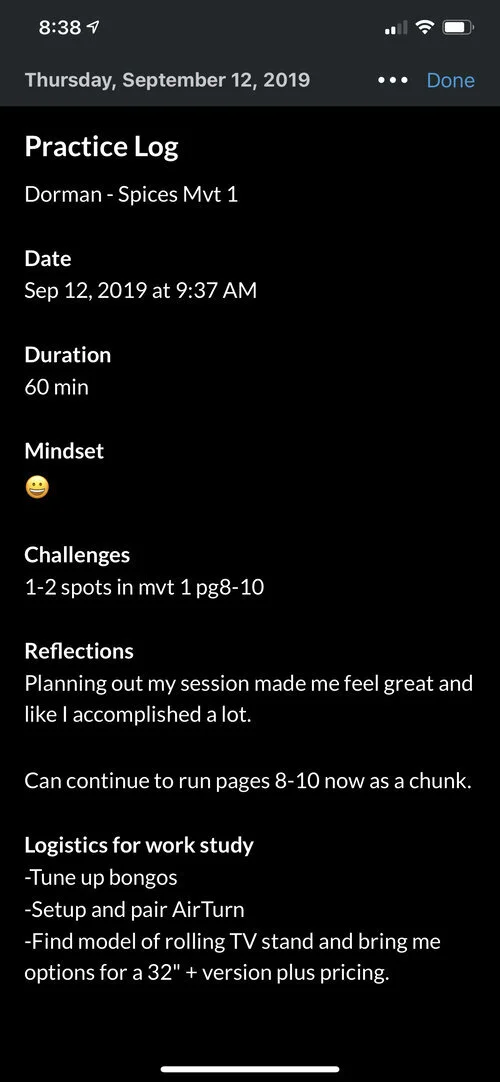
Make the next 12 weeks count
A live planning session for musicians and makers. Tuesday, September 29, 12:30–1:45 ET. Score Q3, pick one to three things for the fall, and price them against the hours you really have. Free.
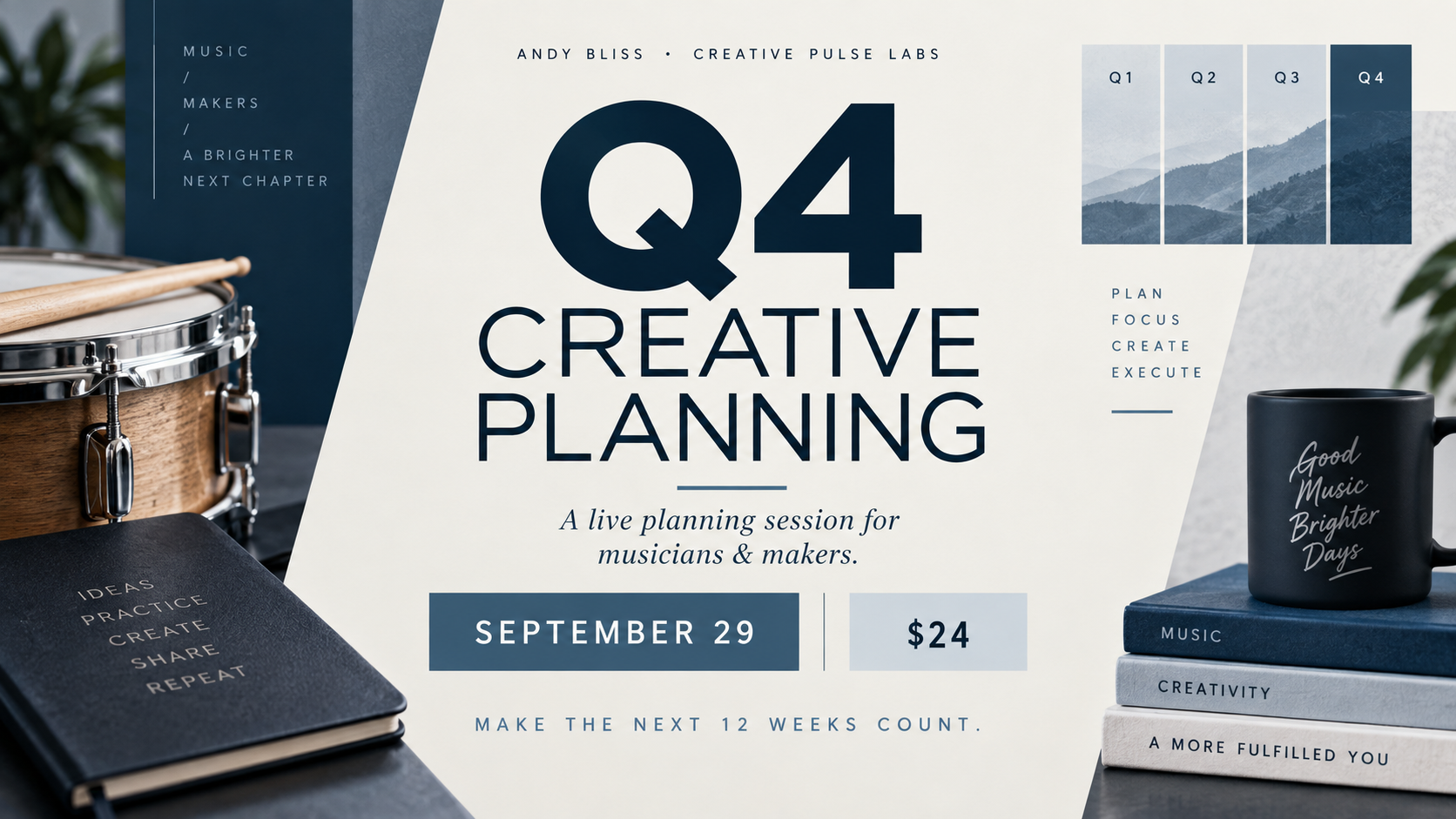
Q4 Creative Planning — a live planning session for musicians and makers. Tuesday, September 29. Free.
October 1 is two weeks out.
On Tuesday, September 29, I'm running a live planning session for musicians and makers. 12:30 to 1:45 Eastern, online, inside Creative Pulse Labs.
We do three things. Score what actually got made in Q3. Pick one to three things worth doing between October and December. Price them against the hours you really have.
Bring your calendar. You'll leave with a Q4 map and the first few weeks already blocked.
Free to attend. You'll need a Creative Pulse Labs account, which is also free.
If you can't make it live, the recording goes up in Labs for everyone who registers.
Nobody Asked Us To Do Any Of It
Four of us rehearsed ten hours a week for nothing. It is still the most useful thing I have ever done.
There was a practice room in college with a shelves of drums and laminate floors and four of us in it, ten hours a week, for no credit.
Nobody assigned it. There was no jury at the end. We decided one day we were a quartet, and then behaved like one until it was true.
We built a website in 2001, thanks to one member having a 2nd degree in design. We made an album, thanks to a professor who had a side-gig in audio engineering. We got ourselves a showcase at our national convention pairing live chamber music with interactive video, which nobody was doing then and which we mostly figured out by getting it wrong until we got it right.
I’ve thought about that room more this fall than I expected to, mostly because the pattern has held.
Every single thing in my working life that turned into something — the festivals, the ensembles, the writings — started the same way. Not with an invitation. With a few people deciding to act as if the thing already existed.
Assigned work has a deadline and a grader and a clear finish. It is also, almost by definition, work somebody else already imagined. You can do it excellently and still land exactly where the assignment pointed.
Unassigned work is slower, and it feels indulgent for a long time. There’s no external signal telling you it’s going well. Ten hours a week is a lot to spend on something that might amount to nothing, and for most of that first year it did amount to nothing.
Then it compounded, all at once, in a way I could not have planned.
I’m not romanticizing being busy. The point isn’t volume. It’s that the hours went somewhere nobody was watching, which is the only place work becomes yours instead of a well-executed version of somebody else’s idea.
So the question I keep putting to my students, and lately to myself: what are you working on that nobody asked for?
If the answer is nothing, that’s worth knowing. It usually means the assigned work has quietly taken all of it.
I write a note each week diving deeper into ideas like these. It’s here if you want it.
Finish One Thing
Creative work isn’t finished when it’s good enough. It’s finished when you decide to share it.
I’m a starter.
I’ve got folders — okay, several folders — full of things I began with real fire and never quite finished. A piece that’s three-quarters composed. A course outline that stalled at week four. A recording that’s been “almost done” for longer than I’d care to admit.
Starting has never been my problem. Finishing is.
And I’ve come to believe that creative work isn’t finished when you start it, and it isn’t finished when it’s finally “good enough.” It’s finished when you decide to share it — when you cross the line from mine to yours. That’s the hard step.
Starting is safe. It’s exciting, and it never really risks anything. Finishing means deciding a thing is done, putting your name on it, and letting people see it — flaws and all. No wonder so many of us keep a graveyard of almost-finished projects.
But this week, a few things actually crossed that line. A performance video the ensemble and I had been sitting on finally went out. I wrapped a workshop I’d been building for weeks. And on Monday, courses that lived on my computer for months open up to students.
None of it is perfect. All of it is out.
Because creativity isn’t measured by how many things we start — it’s measured by how many we’re willing to finish. And a finished thing, flaws and all, gets to do what an unfinished one never can: teach someone, move someone, remind another maker they aren’t building alone.
So if you’ve got a graveyard like mine, don’t start something new this week. Go finish one thing you already began — and let it go do its job.
Practicing Mindmap
Today I sat down to make a practice log template in Notion for my students, and then this happened…
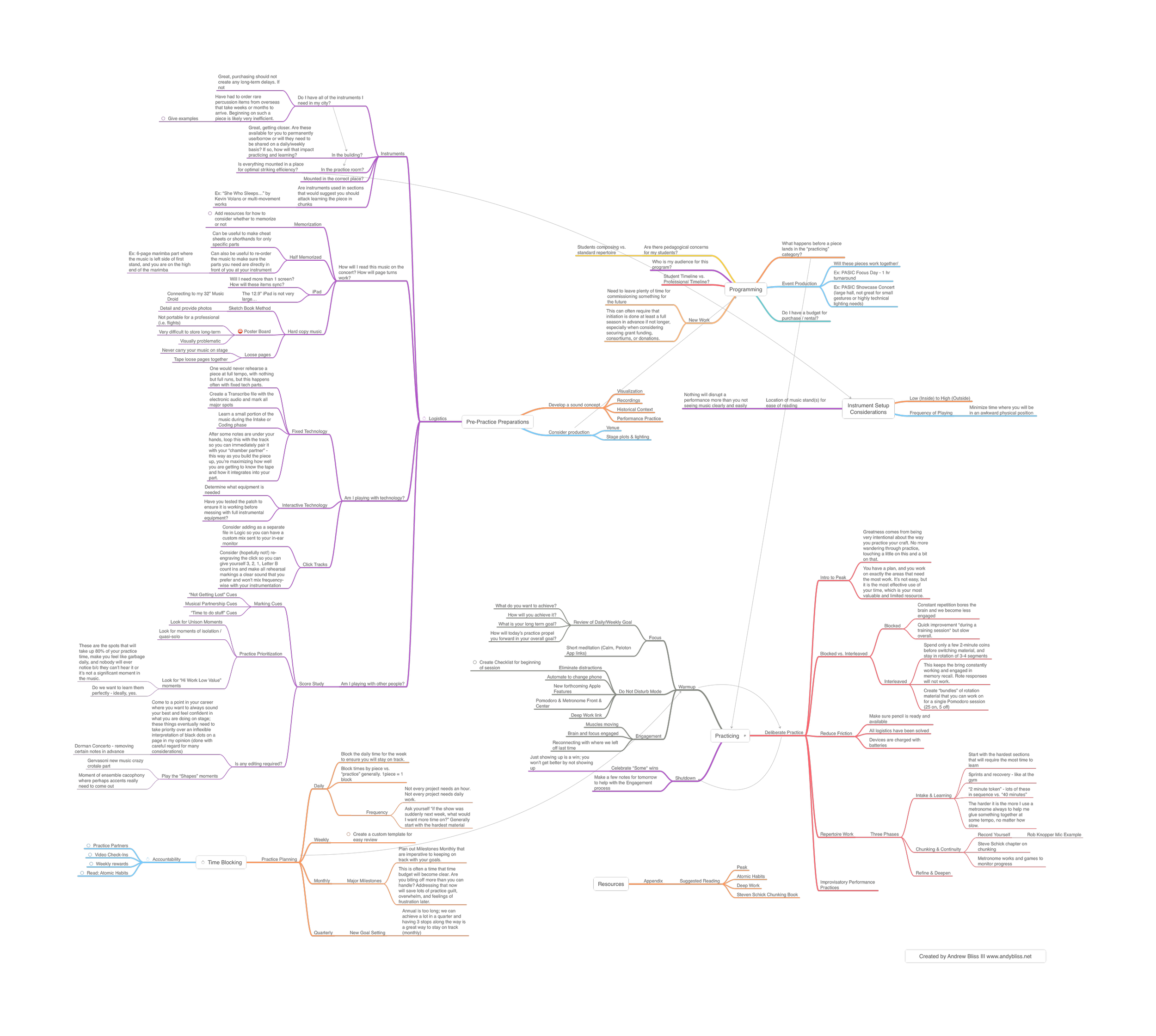
🤯.
All of my former students know I’m constantly shouting “logistics” from the rooftops. Come on, I know too.
But, this truly surprised me to see how many areas of our forward-facing practice and performance habits trace back to roots tied to preparation and intentionality.
Performance coachings are commonly in service of extracting our best musical selves, but often the friction or gap that is uncovered is several phases back in this process.
We end up skipping so many steps unintentionally. Practicing is very much an iceberg-meme situation; much of the work is underwater and in preparation phases — before we are ever in the room with the instrument.
Fall always represents a return to this methodology for me. My primary goal with my first year university students is to establish practice habits - a healthy balance, great strategies, and supportive, compounding methods for growth.
I hope to share more on this through the month of September (and I really need to get back to that Notion template…) In the meantime, I would love to know:
>> What is on your mind surrounding the topic of practicing?
Drop me a line! 🆎
———
P.S. If you’re curious, this software is called MindNode. It’s absolutely one of my favorite platforms to go when I need to think or pursue some mental untangling!
The Great Studio Build-Out Begins…
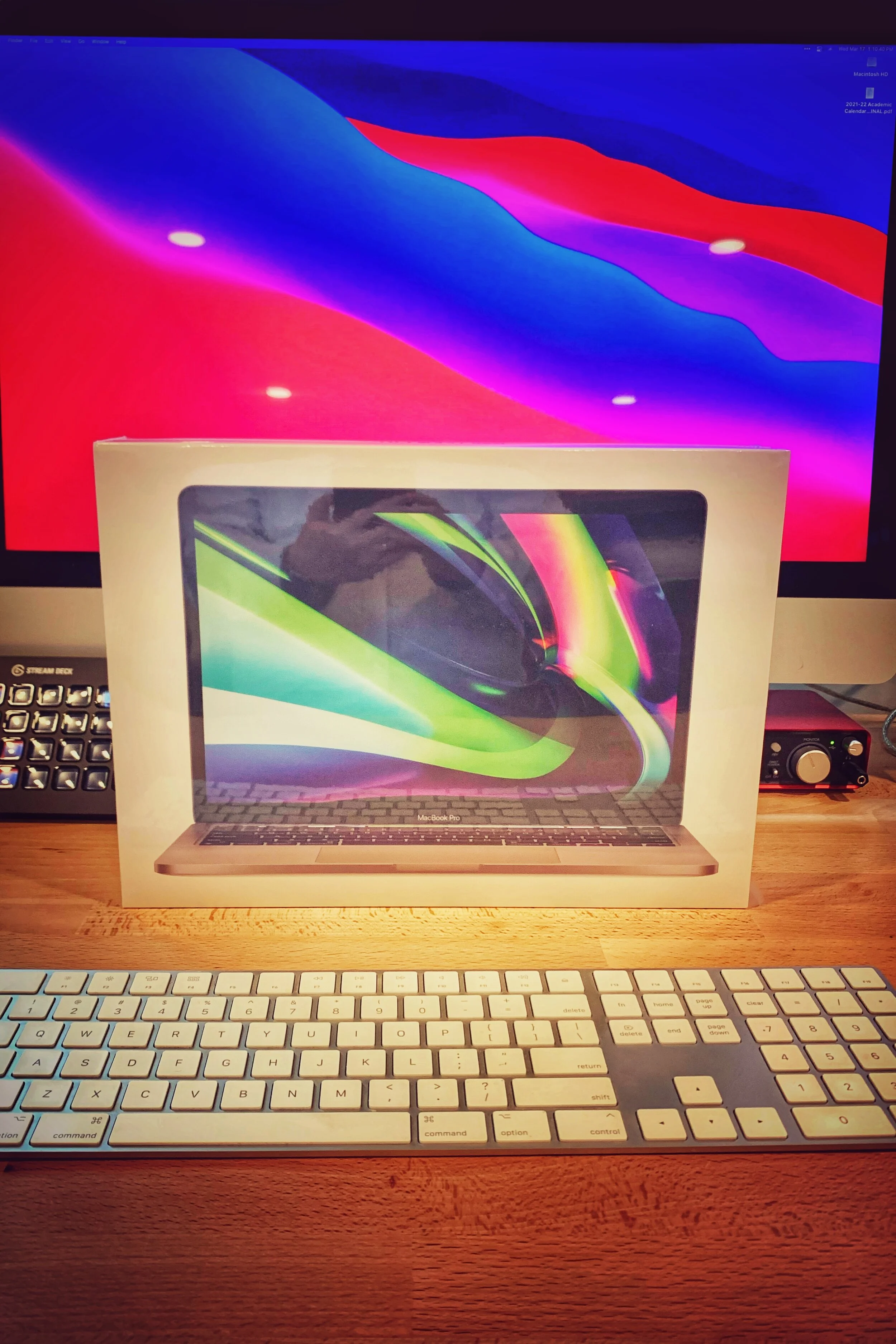
Today is a very exciting day. I’ve been working behind the scenes for months on a new studio upgrade that is inline with a lot of professional goals I have. For those of you who have been around for awhile you likely noticed a face lift on my website recently, which allows me to automate and upgrade my forthcoming newsletter as well as regular scheduling for clients and colleagues.
However, in addition to this, I’ve recently written and received a grant that will be focused on overhauling some of my instruments and significantly bolstering my audio, video, and lighting equipment for content creation. That process begins today with the first item arriving—a 13” M1 MacBook Pro.
I have been an iMac user for 16 years and have had a desktop computer for as long as I remember. My family had an Apple IIe, in high school and college I had a custom built PC, and then when I began grad school I bought an iMac. I love working at a desk and as I’ve proclaimed earlier, am obsessed with large work spaces. I’ve had laptops along the way, but have always had a desktop as my main machine.
However, I’ve always been frustrated by how dialed in I get my home machine, and much of that work doesn’t transfer to my laptop or my desktop at work. At home I have Hazel automating in the background, certain settings in apps like Apple Mail are tweaked, or even something as simple as a new desktop wallpaper may be missing. All kinds of small things occur and I never want to go back and do those a 2nd, or especially, a 3rd time on another machine. In general there is maintenance to multiple machines as well from software updates to battery life, and the friction really adds up.
So, with the announcement of the new Apple Silicon chips, I’ve decided to give the laptop lifestyle a chance. It’s a bit terrifying, but over the coming weeks, I’m planning to (attempt) to merge everything from my home iMac, work iMac, and work laptop (my rock solid 2012 MacBook Air) onto this new 13” M1 MacBook Pro which has been fully upgraded to include 16GB of Ram and a 2TB hard drive. This machine is going to drive audio/video recording sessions as well as all of my daily computing, and I can’t wait to get it fully optimized. Much more to come on this transition and all the equipment coming for the new studio. Until then, it’s a bittersweet day as I step out into new territory with this laptop.
Personal Practice Journal: Day One + Siri Shortcuts
For over a year now, I’ve been working on refining my journaling habit for my personal practice sessions. I’ve always been a believer that journaling (not just for practicing) can be helpful in a couple of ways, two in particular:
First, it allows me to quickly review at the end of the day how my plan went, so I can properly divide my allotted time the next day to be as impactful as possible.
Second, I find it helps my mental health tremendously. Writing down how my practicing went helps me unload that mental weight, think critically about how to respond, and then leave it alone so I can move on with my day.
I’ve done a lot of homework on which tool to use for journaling, and for me, Day One is definitely the app of choice. Day One has apps for iOS and Mac and I really love writing in them, especially on the iPad Pro with the Magic Keyboard.
The journal entries can easily include pictures, microphone input for dictation, and much more, and I’m finding more uses for the rich features each time I’m writing. Siri Shortcuts was the tool that made this really take off for me. By pre-populating a list of prompts, the input is very easy. I find my entries are faster, yet more thorough using this shortcut, and it takes me very little time to enter.
If you’d like to give this a whirl, download my Shortcut and give it a try! Open the shortcut and simply replace my repertoire list with yours, then at the bottom redirect to your DayOne Journal and you should be off and running.