What I Sent My Nephew
He’s starting percussion. The photo I sent him was mostly a rubber pad, and that was the point.
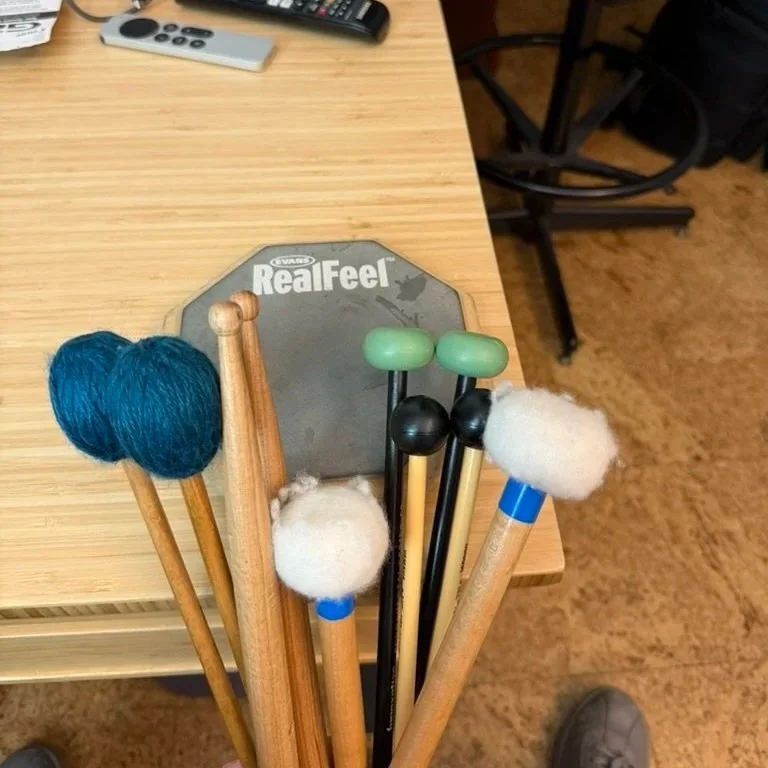
A practice pad and percussion mallets — yarn, rubber, hard plastic — with a pair of drumsticks.
My nephew is starting percussion!
Rounded up a bundle of things from the depth of my gear cage: a practice pad, a fistful of mallets, and of course some sticks.
Really excited for him to start this journey. Hope it brings him a fraction of the joy that it has brought me in my lifetime.
Perhaps I should have also included some knitting needles, a chopstick, maybe a comb?
The Steel Pan Detour
I have played bass pan at Panorama in Brooklyn and at the World Steel Band Festival in Port of Spain. Neither is on any track toward the job I have.
Years ago, I had the pleasure of playing double seconds at Brooklyn Panorama — the largest steelband celebration in the world outside Trinidad and Tobago itself. I was privelaged to join Crossfire Steel Orchestra’s performance of Scene, arranged by Kendall Williams, made up of players from Trinidad and Tobago, the wider West Indies, and all over the United States.
Before that, in 2000, I played bass pan with Northern Illinois University’s steelband at the World Steel Band Festival in Port of Spain. We placed second. It was the first U.S. group to place in the finals of that competition.
Relatively speaking, very few people I know in music have walked these musical roads. It doesn’t appear in the “standard” literature, and it will not help you win an orchestral audition. In fact, many percussion programs are severely lacking in exposure to non-Western styles comprehensively.
A steelband arrangement for Panorama is eight to ten minutes of continuous music, memorized, played by somewhere between sixty and a hundred people, most of whom are reading nothing at all. There is no conductor keeping you honest. The arrangement lives in the room, distributed across everyone, and it stays alive only because each section knows its part cold and knows where every other section is at all times.
That is a completely different model of ensemble from the one I was trained in. In the music I usually play, precision comes from the page and from a person out front holding it together. In a steelband it comes from everyone having internalized so much that the thing is load-bearing without either.
I think about it constantly when I work with a percussion ensemble. The instinct is always to add structure: more rehearsal marks, more cues, more of me. The steelband answer is the opposite — put the information in the players until the structure isn’t needed.
Playing in the NIU and Crossfire Steel bands remains some of the single most useful ensemble experiences I have had, and ironically, it is the one nobody asks me about.
The Snare Drummer From Sevier County
Dolly Parton played snare in a marching band forty-five minutes from my office, then spent the rest of her life paying for other people’s.
In 2013 a high school band director named Nathan Hickman took his students to play a concert at Dollywood, and one of them asked whether he knew Dolly Parton.
He said yes. He said they’d been friends for years.
He had never met her.
She overheard it. And when she walked out on stage she said, “Hey Nathan! I’m so glad you are at Sevier County now!” and hugged him in front of his entire band.
He found out later this was a whole apparatus — somebody standing offstage feeding her the names of people she was about to meet. He says it’s still one of his favorite memories.
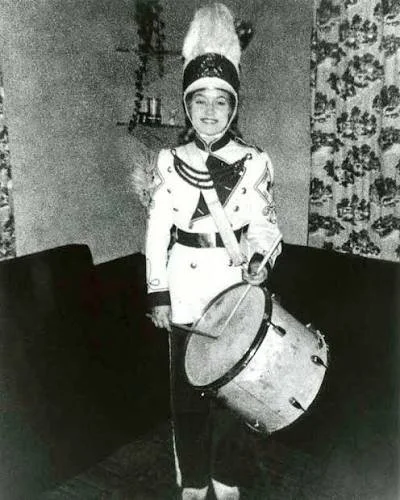
Dolly Parton, September 1963
I keep turning that over, because the machinery doesn’t cheapen it. It’s the opposite. Somebody built a system whose entire purpose was making other people feel known. That takes staff, and planning, and a decision about what your fame is for.
Sevier County High School is about forty-five minutes from my office. Dolly graduated in 1964 and left for Nashville the next day. Before she left, she played snare drum in the marching band.
She funded that program for decades afterward. The band wears small butterflies on their purple uniforms because of her. She was also an anonymous donor to hundreds of school districts across the South, most of them primarily Black, plus food banks and literacy programs she never put her name on.
She died on August 25th, at 80.
Tomorrow night the Sevier County band plays “I Will Always Love You” at halftime alongside the Jefferson County band, and the alumni are coming back to play it with them.
Here’s what I can’t get past, teaching percussion in the same corner of this state.
Snare drum is the least glamorous job in a marching band. You’re the timekeeper. No melody, no solo, and if you’re doing it perfectly nobody notices you at all. Every drum line I’ve taught has one kid who understands that the section works because somebody is willing to be the floor.
She was that kid. Then she got the biggest voice in American music and spent fifty years quietly being the floor under everybody else’s band program.
Hickman said it better than I can. He said she was a tiny giant.
A New percussionist on campus
Somebody built a balloon marching band member in the lobby, and of all the instruments in the building they handed him the punchline.
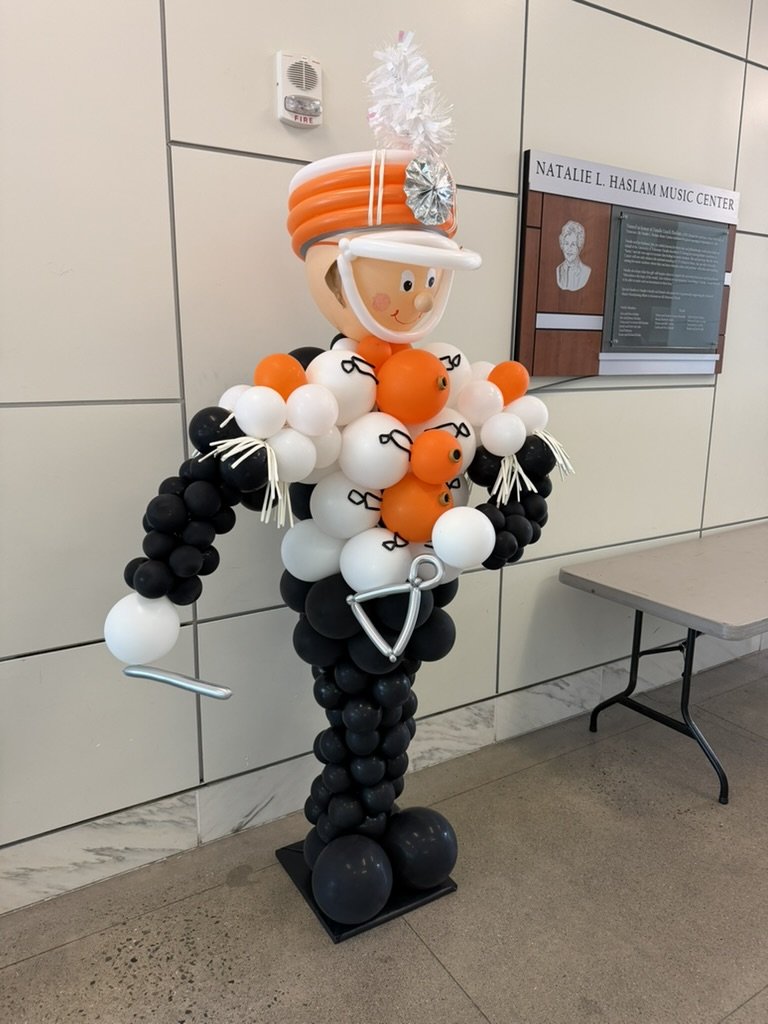
First week of classes, and somebody has built a balloon marching band member in the lobby of the Haslam Music Center. Orange and white shako, tinsel plume, rhinestone on the front, little squiggles down the uniform.
Also, they gave him a triangle. :)
Beater in one hand, triangle dangling from the other. Out of every instrument in that building — and there are a lot of them — the balloon guy got the triangle.
I’ll defend it a little. Not because the triangle is secretly the hardest thing in the orchestra, because it isn’t. But it is exposed in a way almost nothing else is. One note, no attack to hide behind, nowhere to blend. If you’re early, everybody knows exactly who was early. There’s no section to disappear into and no chord to be a third of.
Which is a real skill, and also, yes, it’s a triangle.
He’s holding it about right, though. Grip’s a little tense. We’ll work on it.
Welcome back to everyone here on Rocky Top. 🍊
The Uphill Battle
Percussion is the only section of the orchestra that had to argue its way in. That turns out to be useful.
There’s a joke that follows every percussionist. You’ve heard some version of it — the one about the knocking that speeds up, the one about what you call the guy who hangs around with musicians.
I’ve been hearing them for thirty years. I still laugh at the good ones.
But here’s what I’ve started noticing. Percussion is the only section of the orchestra that had to argue its way in. Strings were assumed. Winds were assumed. Drums had to make a case — piece by piece, composer by composer, across about two hundred years. Somebody had to convince a room full of people that a bass drum belonged there at all.
That’s a strange inheritance to carry.
Percussion is the only section of the orchestra that had to argue its way in.
It also turns out to be useful.
We had a guest artist in the studio this week, Dieter Hennings, sitting with our students and talking about the shape of a career. He said something I’ve been chewing on since: every musician needs a team.
Not a manager and a booking agent. Collaborators. The people who make the thing with you. Nobody is going to hand you the room, and you don’t build it alone either — you build it with a community.
Which is, historically speaking, the percussionist’s entire job description.
We’re the ones who show up to a piece with no performance tradition and work out what the instrument even is. We’re the ones who invent the setup because the setup isn’t written down. We convince the composer. We find the four other people who want to make the strange thing with us.
Nobody asks. That’s the whole point.
I spent twenty years building Nief-Norf, and not one day of it began with an invitation. It began with a phone call to somebody whose work I wanted to be near.
So here’s the small thing, if you’re carrying something nobody has asked you for.
Name one person who would make it better. Tell them about it this week.
Just the idea, said out loud, to somebody whose work you respect. That is how every real thing I have made got started — not with a plan, with a conversation.
The joke is that drummers just hit things.
The truth is we have spent two centuries learning how to argue for the thing we want to make, and then making it anyway.

Big Ears with Sō Percussion
2 Shows with So Percussion at Big Ears
This week I’m back at the Big Ears Festival for two performances that sit at pretty different ends of what I do.
I’m joining Sō Percussion for Julius Eastman’s Stay On It at the Greyhound Bus Terminal — a venue the festival opens up just for this. It’s a fitting room for a piece built to stay open-ended.
Later in the week I’m back with the ensemble behind our 2014 Drumming for a revival at The Mill & Mine. Reich’s piece has a way of getting clearer every time you return to it.
Make Music Knoxville
I was fortunate to direct Elliot Cole’s Flowerpot Music with Nief-Norf & friends for the first ever Make Music Day event in Knoxville. Always such a pleasure to get out and enjoy our local Ijam’s Nature Center here in town and make some music with the local community!
Elevating Performance Atmosphere
I know, I know—musicians don’t need yet another thing to worry about in addition to performing. Trust me, as a percussionist (read: logistical ninja) I’m fully on board with musicians being able to focus on their performing and having an appropriate staff to handle production. However, I’ve recently been expanding my Gear Cage to include some LED lights (Affiliate Link) and a DMX control board (Affiliate Link). Having these items handy has been incredibly easy to implement into my performance practice, and it can take an otherwise non-inspiring performance space and make it a focused listening environment.
I’ve found the physical controller gives a lot of creative options throughout a performance, and it has a robust amount of programming options to align with an artistic vision. For example, at the Nief-Norf Summer Festival, our team programs more than a dozen concerts over two weeks. The Sandra G. Powell Recital Hall at the University of Tennessee is gorgeous, but in the end, it is still a Recital Hall. We’ve had a lot of success transforming the space by installing quad-speaker surround sound, having a pre-show playlist, and most of all, by doing our own lighting design.
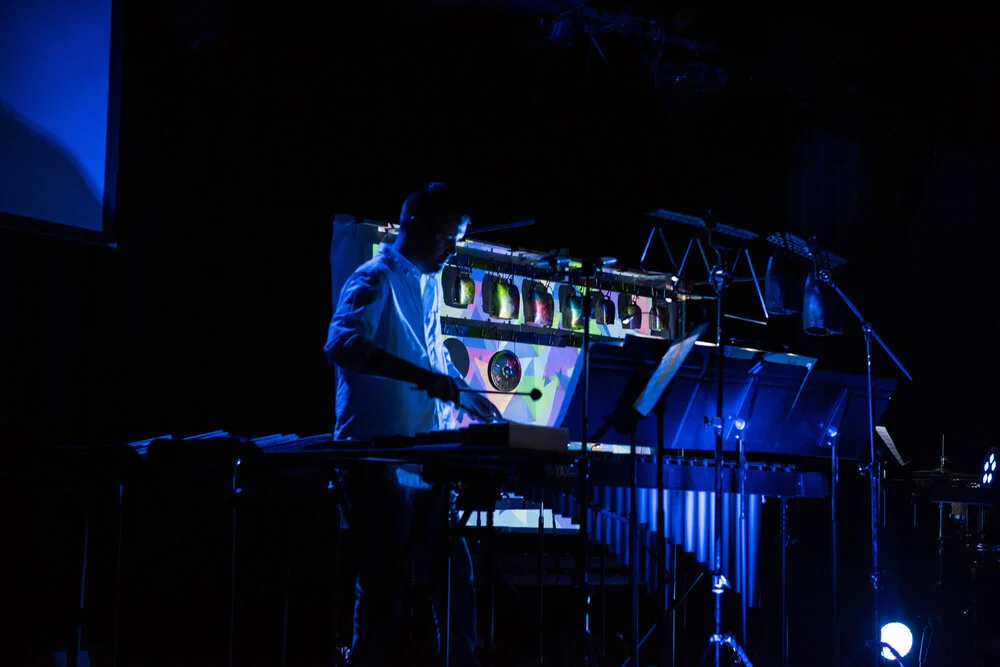
Performing Christopher Burns’ Constellations at the Big Ears Festival. DMX Lighting placed around the stage and interacting with the performance.
It’s of course possible to elevate the controls through DAW usage as well, automating them or causing them to interact with the performance in many ways. The options here are endless. But for entry-level usage, a pair of lights and an analog controller can transform an after-hours book store into a community performance venue. For around $300, this combination can do a lot for a performance, and I see musicians spend far more on other equipment that sometimes gets them far less.
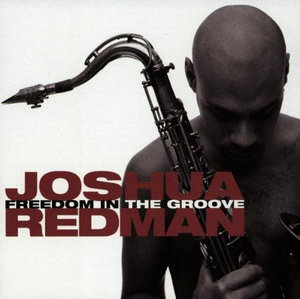
Freedom in the Groove
I just returned from Macstock 2019 in McHenry, IL and had an amazing time. It was such a treat to branch out of my usual activities and share two days learning about something I’m passionate about, while also making some new friends.
I wondered how much I would have to add to the conversation as someone who is not a computer programmer or an engineer, for example. However, in meeting all of these tech-enthusiasts, I was amazed at how many of them mentioned music being their muse. My new friend Mike Melcer from NY showed me two awesome new-to-me apps (review on the way) that he uses for casual music making at home. He even stumped me when he asked for suggestions for apps that help develop relative pitch. Mike Schmitz and I had a great chat about his upbringing on violin and I got the chance to bump into Kourosh Dini, who lives in Chicago and regularly plays piano and guitar. All of us work in different fields day-to-day, so it was enlightening to see how easy it was to find commonalities.
The first night I was there, I had an extended chat with David Sparks (aka MacSparky) and Mike Melcer about a range of topics including Apple, Star Wars & Galaxy’s Edge, and his background as a jazz saxophonist. David has spoken often about how he uses the saxophone as a 30-minute break in his day-to-day, and how the short breaks actually help him to refocus and recharge his energy in the afternoon. Among our conversations, he mentioned a favorite track of his by Joshua Redman called “Hide & Seek,” from his 1996 album Freedom in the Groove. I could sense his pride when he mentioned his daughter being able to scat through most of the tune from his repeated plays of the track, an experience I’ve shared as I’ve heard various records work their way into my kids’ playlists and backseat singing. Always a heart-warming experience as a Dad.
When the weekend wrapped up, I grabbed a car to the airport and was actually feeling a little overwhelmed. The weekend helped to focus lots of really exciting ideas and possibilities to use technology as a means to creating more meaningful work, and that is always an exciting prospect. Once I worked through airport security at O’Hare, I popped in my AirPods and grabbed a meal at the Chicago Cubs Bar & Grill (where else?). I started reviewing my notes and was reminded that I needed to check out “Hide & Seek.” My history with Joshua Redman actually goes back to ~2002, when I joined some friends on an impromptu trip into Chicago from Northern Illinois University. We headed to the Jazz Showcase and saw the Dave Holland Quintet, grabbed dinner at the ESPN Zone, and then found out Redman was in town, so we headed up to Martyrs to hear him with Sam Yahel and Brian Blade, touring their recent Elastic album release. I picked up the album and played it nearly every morning for a solid year as I was getting ready…my roommate was a jazz bass major and may never listen to Joshua Redman again because of me.
O’Hare that day was slammed and, in general, was feeling rather claustrophobic. However, thanks to my AirPods, I was having a completely musical experience – all but dancing down the terminal hallway toward my gate. David was right. “Hide and Seek” is an incredible opening track and the album ended up sticking with me for the rest of the night. It was so inspiring to reconnect with a musical favorite that had made his way off of my recent playlists. My gate ended up being at the end of the terminal in one of those basement, dead-end, cul-de-sacs, where everyone is crowded and miserable. Meanwhile, I was having a completely isolated experience trying not to draw attention to myself as I was digging each track of the album. I got on the plane and was seated next to someone whose body type was taking up half of my seat. Didn’t matter though, I was locked into the record.
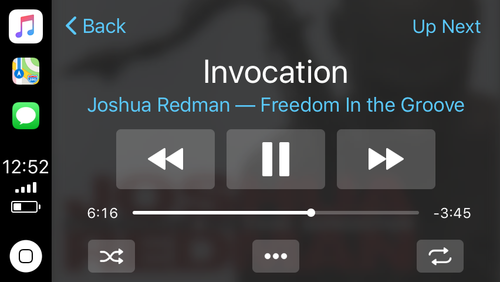
I knew Sunday night was going to be a long night, with a late flight and even later commute home, but listening to this album made it feel like time travel. I finally hit Knoxville, just shy of 1AM and reveled while listening to Invocation, another favorite track of mine from the album. Now on my Apple Carplay and on my 3rd or 4th time through the disc, I was driving home and excited to start the week home with my family. My overwhelm was gone and the travel time seemed to disappear. The music inspired me and I was able to capture some clarity and meaningful notes on a few projects during the journey in Apple Notes. While AirPods, an iPhone, and Apple Notes are not exactly “advanced” technology, this experience never would have been possible years ago. We had talked all weekend at MacStock about using technology to get to the creative work, and I was thankful to be arriving home inspired, clear-minded, and ready to get back to the daily mission of creating meaningful art.
Broken Instrument Commission
Interesting article in the New York Times today sharing an innovative commissioning project involving David Lang and the broken instruments in the Philadelphia school system. Love the idea of a commission, creativity, and mobilizing a local population to aid a broken situation in the arts.
Nief-Norf Summer Festival Applications Open
The Nief-Norf Summer Festival applications are now open for 2018 (trailer below) and we have another exciting year planned. Great to see all these friendly faces again after an amazing time last summer!
Video: Four/Ten Media
Music: Marc Mellits "5 Machines"
University of Tennessee Percussion Night: Duos
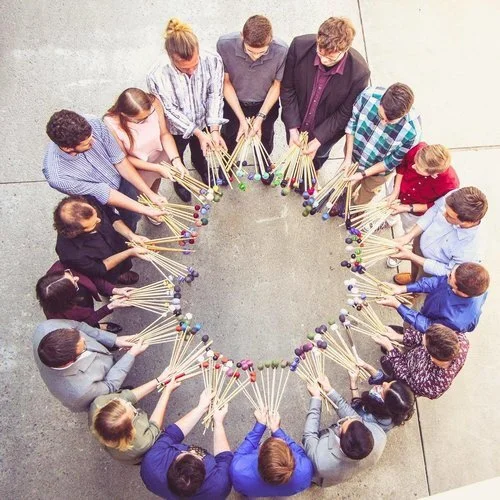
Tomorrow night my students at the University of Tennessee will be presenting their work in the Fall 2017 Percussion Studio Night (Facebook event info) at 8 PM in the Sandra G. Powell Recital Hall. Join us!
The Studio Recital, as an event, has proven to be a very worthwhile curricular tool and is one of the requirements I used to ultimately replace juries in our program. I love that the Studio Recital puts them on stage, in concert dress, under the lights, in a "real" performance environment which also includes a live audience (few of these parameters are provided in most jury performance environments). Additionally, afterward, they walk away with a program for use in their records as well as a quality live recording (audio + video) which they can also add to their portfolio.
Pedagogically, it has also offered valuable performance experience for younger players. While I believe it to be common for students to perform for each other in studio class and similar formats, students often don't receive much solo performance time with the realities of a recital as outlined above (under the lights, live general audience, etc). Having them step on stage with only one piece to conquer for that evening seems like a very achievable task, setting them up for success their junior year when they have to walk out and hold the stage for an hour. By that time they will have had at least 4 of these studio recital performances under their belt, if not more.
I remember the opening notes of my junior recital and how much my mind was racing. Looking into the crowd and seeing friends from so many different parts of my life in one room was equally heartwarming and confusing. I remember thinking things like "Why is my uncle sitting next to my friend from high school? Do they know each other?" Meanwhile, I'm stepping up to the marimba to play some very soft Keiko Abe notes to open the show, which... let's just say didn't feel particularly controlled that night. I'm hoping the Studio Recital gives the students a bit more of a footing when they step on stage for their own recitals as they get to the end of their degree programs, having had a few swings at the plate prior to that night.
This semester, the Percussion Night event has a theme of "Duos." For me, this is a performance combination that often gets missed as our percussion ensemble will usually focus on works for 3 or more players. There is some fantastic repertoire out there to be explored for duos and I'm excited to hear the wide variety of performances tomorrow evening. The inspiration also came from the Wagner-esque event we had last semester as all of the solos had us there for way too long...
For those in the Knoxville-area, please consider stopping by to hear some of this great repertoire tomorrow including Seeds by Leonardo Gorosito/Rafael Alberto, Wooden Music by Rich O'Meara, Catching Shadows by Ivan Trevino, Table Talk by Alyssa Weinberg, Dance Groove Drifting (from Book of Grooves) by Alejandro Viñao, Passacaglia by Anna Ignatowicz, and Karakurenai by Andy Akiho. In addition, the UT graduate students will be performing Zyklus by Karlheinz Stockhausen, ...And Points North by Stuart Saunders Smith, and a world premiere commission for cello + percussion by Tyler Eschendal.
Finally, a big thank you to Abby Fisher who has been doing an incredible job running the program this semester while I'm away on paternity leave!
Harry Potter with KSO
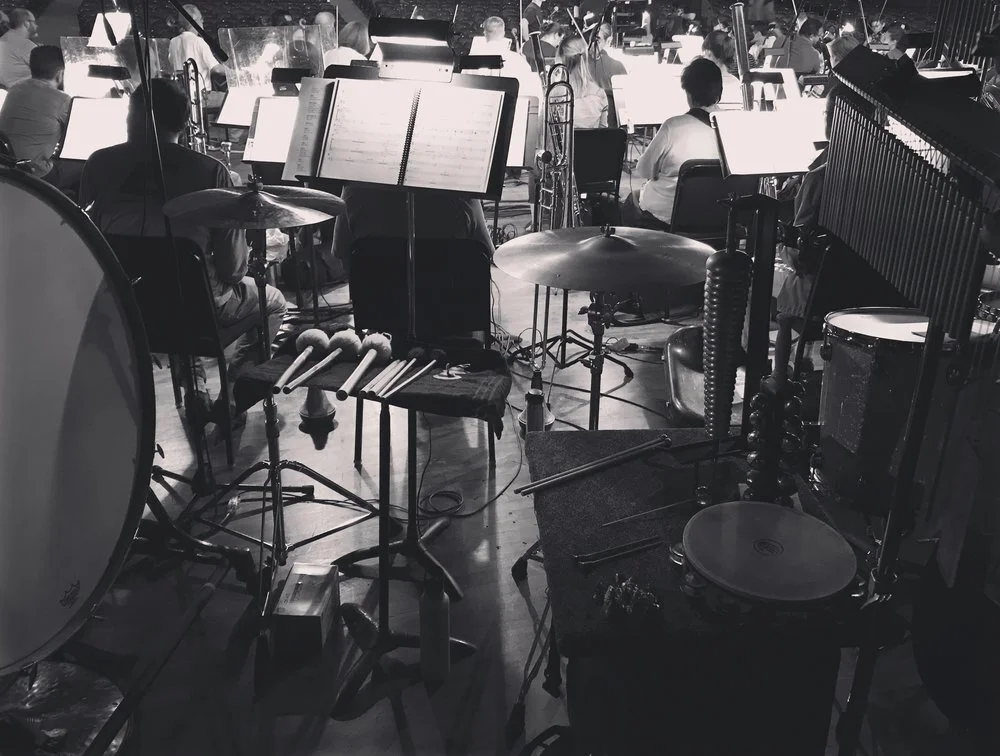
Great double rehearsal yesterday with the Knoxville Symphony Orchestra (event info), preparing for this weekend's Harry Potter and The Sorcerer's Stone concerts. I don't think I've ever played so much Bell Tree and Mark Tree in one gig, but these are the sounds of a wizard!
Rising Tide by Nina Young
I recently had the good fortune to collaborate with composer Nina Young at the 2017 Nief-Norf Summer Festival. We spent some time on various projects and heard 4 of her pieces in concert throughout the week, and I'm excited to share this recording of her piece for 7 musicians Rising Tide.